Friday, April 11, 2014

I like the Idea of Highlander Much More Than the Franchise Itself

(Image taken from: debrakristi.wordpress.com)

"There can only be one." One what? One good movie in the entire franchise? Being a massive nerd, I've always wanted one science fiction/fantasy franchise to really cling on to. I like Star Trek and all, but I could never call myself a Trekkie. Star Wars has its merits, but I don't share the enthusiasm that its true blue (lightsaber) fans share. So what then? Stargate? Nope. Fringe? Ummm...nope. Firefly? Well, I want to love it, but I just don't (Does that make me a bad person?) The only show I've truly grown obsessive over is Breaking Bad, but it doesn't fit the sci-fi/fantasy quota I've been looking for. I'm a pretty big fan of Harry Potter, but I'm not obsessive about it, and I WANT to be obsessive for a fantasy/sci-fi world. I really do.

Well, a few years back, I thought I might have found what I was looking for in Highlander. The first movie was amazing. It featured Christopher Lambert (Raiden!), Sean Connery (James Bond!) and a theme song by Queen (Queen!). It had pretty much everything I was looking for in a fantasy/sci-fi world. Lightning, decapitations, and a pretty cool lore. I had finally found my series!


Or so I thought. After being totally jazzed after watching the first Highlander movie, I quickly watched its sequel, Highlander II: The Quickening, and my God! What the hell happened? For those who don't know, Highlander II basically takes a dump over everything you liked about the first movie and then vomits all over it for good measure. It is one of the worst movies I have ever seen, and the follow-up flicks (Highlander: The Source in particular) are all travesties. And the TV show, I'm sad to say, wasn't much better, either. Sure, it had its qualities (Adrian Paul being its prime one), but other than him, the series lacked in anything relatively interesting or groundbreaking like the first film did.

In many ways, the biggest problem with Highlander is that it never one-upped its first outing. It had, and still has, so much potential, but I much prefer the concept of Highlander to the actual franchise. We'll see what happens with the supposed reboot we're supposed to be getting sometime down the line.

Sunday, April 6, 2014

Review: Lone Wolf and Cub Vol. 1

Lone Wolf and Cub, Vol. 1: The Assassin's Road (Lone Wolf and Cub, #1)Lone Wolf and Cub, Vol. 1: The Assassin's Road by Kazuo Koike
My rating: 4 of 5 stars

I picked up this gem a couple of weeks ago and blew through it. I love how some of the stories in this book are pretty much panel for panel what happens in the movie, Shogun Assassin, as the movie is based off of Lone Wolf and Cub series. If I have just one complaint, it's that the text is sometimes hard on the eyes, what with all the whiteness on the page at times. But if you like samurai epics, which I certainly do, then you can't do any better than this. I'm going to pick up the next few volumes soon.

View all my reviews

Review: E.L.F. White Leaves

White Leaves (E.L.F. #1)White Leaves by M.P. Ness
My rating: 3 of 5 stars

Let me just start this off by saying that I'm not a big fantasy guy. I mean, I can enjoy fantasy if it's light on the fantasy and more on the realistic side of things, but I've never been a guy who's into elves or sorcery. E.L.F. starts off on a realistic note, given that it's about eco-terrorists, but then it goes off into a different territory involving elves and stuff like that. That's where it threw me a little. That said, I am probably one of the only people who cannot get through the Lord of the Rings books, and I did get through this book, so that's definitely saying something. M.P. Ness shines when he's writing action scenes, as I know another critic noted. The story of the black leaves and Lady White Leaves is intriguing in that there is a good central female character in Shannon Hunter, who it takes a little while to like, but once you do, you're with her all the way. The writing is good, even though I feel there could have been more description with setting scenes, and the pacing goes quickly once you get to about to page 50 or so. Overall, if you dig fantasy, give this book one more star to my review. It's a good book. It's just not my thing.

View all my reviews

Friday, March 28, 2014

Review: The Right Stuff

The Right StuffThe Right Stuff by Tom Wolfe
My rating: 5 of 5 stars

This is the third book I've read by Tom Wolfe, and it was stupendous! It was ground-breaking! A real treat! (Okay, I'll stop with the exclamation points now. I'm no Tom Wolfe, after all). After having read "The Bonfire of the Vanities," which was fiction, and the "The Electric Kool-Aid Acid Test," which was non-fiction, I was a bit wary to read "The Right Stuff" since I wasn't too fond of the latter book. It was too spacy and disconnected for my liking. But after having read "The Right Stuff," I came to realize that the out-there writing approach used for "The Electric Kool-Aid Acid Test" was purely intentional, as the prose in "The Right Stuff" has a very different and more dramatic tone to it that fits the subject matter. It really works here.

Following test pilots who eventually become astronauts, the story soars with Wolfe's exceptional writing. And since Tom Wolfe was one of the brothers of the "new school of journalism", this true account reads like a novel. I'm actually pretty shocked at how in depth he was allowed to get with his subjects, as there's a lot of talk about things like infidelity and drinking and driving in here. It doesn't always paint the pilots and astronauts in the best light.

But it certainly is juicy, and I understand why the book was such a massive success when it originally came out. I have to watch the movie now. I wonder how this story translated to film. Give it a read if you're into flight and space travel. There's probably no more entertaining book about it.

View all my reviews

Thursday, February 13, 2014

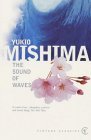
Review: The Sound of Waves

The Sound of WavesThe Sound of Waves by Yukio Mishima
My rating: 3 of 5 stars

I have only read one other book by Mishima--The phenomenal, "The Sailor Who Fell From Grace With the Sea"--and I have to say, this book is a far cry from the brilliance of that novel. I say that only because of the characters presented here, with many of them, while affecting the plot in some way, don't feel all that important in the big scheme of things. For example, the protagonist's brother goes on a trip at one point in the novel and the overall impact of it has nothing to do with the rest of the book other than the fact that he got to see what the world was like outside of their puny fishing village. Yes, it speaks volumes to the setting Mishima strove so hard to set, but character-wise, it kind of falls flat.

That said, the story that lives in this small book (It's under 200 pages), is quaint enough to give it a read. The conflict never feels all that great, and like the small size of the book, the problems also seem quite small and minimalistic (I'm interested to see how they actually made five different films about this book). Overall, it's a fine read, but I wouldn't recommend it it everyone. If you're interested in Mishima, I suggest reading the aforementioned, "The Sailor Who Fell From Grace With the Sea". There's some heavy stuff in there. Looking forward to reading his Sea of Fertility tetralogy.

View all my reviews

Monday, February 10, 2014

Monday, February 3, 2014

Review: Giovanni's Room

Giovanni's RoomGiovanni's Room by James Baldwin
My rating: 4 of 5 stars

Being that I've never read "gay lit" before, I'm not really sure if this is a great introduction to the genre, since I'm almost certain that most modern gay lit isn't like "Giovanni's Room". And why should it be, since this is gay lit written by the magnificent, James Baldwin? Unlike most gay lit--which I'm just guessing, so please don't scorn my ignorance if I'm wrong--this is the story of a man who wishes he wasn't gay, and it details the suffering he goes through loving a man when he knows (or at least, feels), that he shouldn't. It's "Brokeback Mountain" about fifty or so years earlier. And at that, all I can think is, wow, the balls on James Baldwin (The double entendre is, of course, intentional). To write a story like this, which, in a nutshell, is about an American man who falls in love with an Italian man in Paris, as his second novel (in the 50s, no less!) is astonishing. He probably almost sabotaged his entire career writing a book like this, and it's all the more impressive to see just how open and revelatory it is. Baldwin put his soul on the page, and you can see it in every last word. It's even more impressive that he was a black man writing about white men. The scope of this small book is massive, just massive!

Baldwin is a master at characters, so you get a true sense of what all of them are feeling, and why. Giovanni's room itself is actually a metaphor for homosexuality, and the protagonist, David, can't stand being inside it, even though it represents safety and even love for him. Being inside it is the only true time David is happy, and it represents so much in so little that it's a wonderful analogy for being an outsider, even when you're inside somewhere.

That said, while the book is masterful throughout, I kind of didn't like all the descriptions of Paris. I felt the central story was interesting enough and I didn't really need a sight-seeing tour. Even so, the book still stands up as one of the most ambitious novels of the post-modernist age. I've now read both Baldwin's first and second novel, and I hope to read the rest of his fiction in the coming months. This is a masterful, masterful book, that you should definitely read if you're curious about it.

View all my reviews